
Rice Exporter from India to Qatar
India and Qatar share one of the most consistent and growing food trade relationships in the Gulf region, and at the heart of this partnership lies rice. As a trusted rice exporter from India to Qatar, MAD ERA has spent years building a supply chain that connects premium rice-growing regions of Punjab and Haryana directly to Qatari kitchens, hotels, and retail shelves. Qatar imports the vast majority of its food requirements, and rice occupies a central position in both the daily diet of Qatari nationals and the culinary preferences of the country’s large expatriate communities. Understanding this trade corridor, its product diversity, compliance requirements, and logistics dynamics is essential for any buyer, importer, or distributor looking to source Indian rice with confidence.
According to United Nations COMTRADE data, India’s rice exports to Qatar were valued at approximately US$123.78 million in 2022, a figure that reflects not just volume but deep-rooted trust in Indian grain quality. This number has continued to trend upward as Qatar’s population grows, food import infrastructure improves, and demand diversifies beyond staple rice to include premium aromatic varieties and organic alternatives.
Why Qatar Relies on India for Its Rice Supply
Qatar is one of the most food-import-dependent nations in the world, with domestic agriculture limited by desert geography and water scarcity. The country imports more than 90% of its food needs, and rice is among the top commodities by value. India’s dominance in this category is not accidental. It is the product of favorable agricultural conditions, decades of sourcing and export expertise, competitive pricing, and a well-established maritime shipping route connecting Indian ports like Mundra, Kandla, and Nhava Sheva to the Port of Hamad in Doha.
Several structural factors make India the natural choice for Qatar’s rice procurement. India cultivates both basmati and non-basmati rice across millions of acres in the Indo-Gangetic plains, producing grain with characteristics that have no direct substitute in global markets. The long-grain, aromatic basmati varieties grown in Punjab, Haryana, and western Uttar Pradesh carry a Geographical Indication (GI) tag, certifying their origin and authenticity. For Qatari consumers who associate quality biryani and machboos with the distinctive fragrance of aged Indian basmati, there is simply no equivalent product available from other origins.
Beyond basmati, India also supplies a wide range of non-basmati rice at price points that support the food service sector, institutional catering, and value retail segments. The combination of product diversity, supply reliability, competitive FOB pricing, and a large Indian diaspora community in Qatar that actively influences purchasing preferences has cemented India’s position as the dominant rice origin for this Gulf market
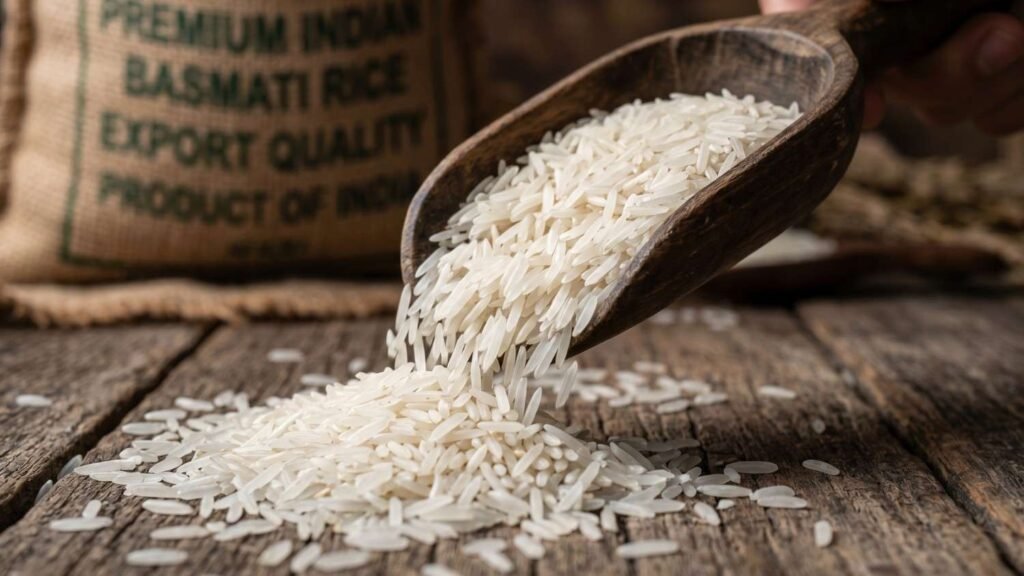
The Full Product Range: What MAD ERA Exports to Qatar
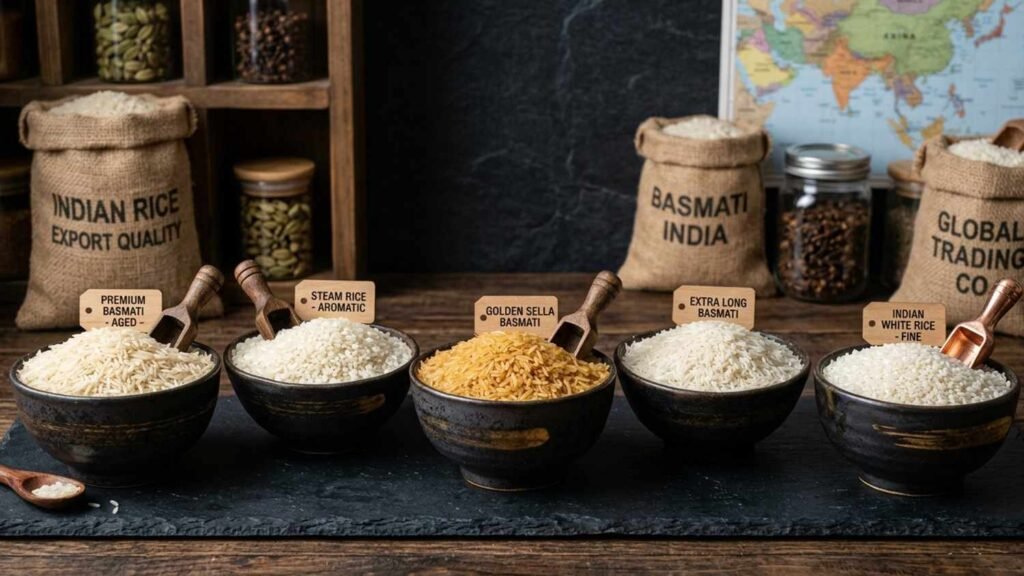
One of the most important things to understand about sourcing rice from India is that “rice” is not a single product. The spectrum of varieties, processing methods, and quality grades is broad, and different products serve different end-use applications. MAD ERA maintains a comprehensive portfolio across all major categories to ensure that buyers in Qatar can consolidate their sourcing under one trusted supplier.
Basmati Rice Varieties
Basmati rice is the flagship category in India-Qatar rice trade, driven by Qatar’s love for biryanis, pilafs, and aromatic rice dishes. The key basmati varieties available from MAD ERA include:
1121 Basmati Rice is currently the most widely exported Indian basmati variety globally. It is known for its exceptional extra-long grain length, with an average grain length (AGL) of approximately 8.30 to 8.35 mm in the raw form and the ability to elongate to nearly double its uncooked length upon preparation. It is available in raw, steam, sella, and golden sella forms, each suited to different cooking preferences and shelf-life requirements.
Pusa Basmati Rice is a versatile variety with a grain length of around 7.40 to 7.45 mm and a pleasantly balanced aroma. It is widely preferred for restaurants and caterers in Qatar who want consistent quality at a slightly more accessible price point than 1121.
Traditional Basmati Rice is the original, naturally aged variety that represents the purest expression of basmati heritage. Sought after by connoisseurs and premium hotel chains in Qatar, traditional basmati has a shorter but more intensely aromatic grain that absorbs flavors beautifully.
1509 Basmati Rice is a newer cultivar with an AGL close to 8.35 to 8.40 mm and an early harvest cycle that makes it available sooner in the season. It has gained significant popularity in Qatar’s Gulf food market due to its affordability relative to 1121 without a significant drop in sensory quality.
1402 Basmati Rice is a sturdy, high-yield variety appreciated for bulk institutional procurement and offers good elongation along with a clean, mildly fragrant profile.
1718 Basmati Rice features the longest grain among commercial Indian basmati varieties, with an AGL reaching up to 8.40 mm. It commands a premium in markets where presentation is paramount, such as luxury dining establishments.
Each of these varieties is available in multiple forms. Raw (white) rice is sorted and cleaned without any steam treatment, preserving natural starch and aroma but requiring careful handling. Steam-processed rice undergoes partial steaming before export grading, which improves cooking texture and reduces breakage. Sella rice is parboiled before grading, giving it a firmer texture, improved nutritional retention, and an extended shelf life ideal for long shipping periods to Gulf destinations. Golden sella rice carries a characteristic golden hue from the parboiling process and is extremely popular across GCC markets.
Non-Basmati Rice Varieties
Non-basmati rice forms an essential part of the export basket from India to Qatar, particularly for mass-market retail, food processing, and catering industries.
PR 11 (Pb 11) and PR 14 (Pb 14) Non-Basmati Rice are medium-long grain varieties grown primarily in Punjab. They offer a clean white appearance, good export grade quality, and economic pricing that suits institutional buyers such as schools, hospitals, and labor accommodation caterers.
Parmal Non-Basmati Rice is a shorter grain variety used extensively in processed food applications and everyday cooking in communities that prefer softer-textured rice.
Sugandha Rice bridges the gap between basmati and non-basmati categories. It carries a mild natural fragrance and an AGL of around 7.85 to 7.90 mm, making it attractive for buyers who want aromatic characteristics without paying full basmati prices.
Sharbati Rice is another semi-aromatic variety with similar grain dimensions to Sugandha and has built a loyal consumer base in several Gulf markets due to its pleasant taste and affordability.
Round (Short) Grain Non-Basmati Rice and Jeera (Jeera Samba style) Non-Basmati Rice serve niche culinary applications and are available on request.
Sona Masoori Rice is a lightweight, low-starch variety widely used in South Indian cooking. It has become increasingly popular in Qatar given the large South Indian expat community and is available in raw and sella forms.
Organic Rice Variants
As health-consciousness grows among Qatari and expatriate consumers, demand for certified organic rice has risen steadily. MAD ERA offers a dedicated organic portfolio including 1121 Organic Basmati Rice, 1509 Organic Basmati Rice, Organic Sugandha Basmati Rice, and Organic Sharbati Basmati Rice. These products are grown under strict organic cultivation protocols, free from synthetic pesticides and chemical fertilizers, and are certified through recognized organic certification bodies.
Complementing the organic range, MAD ERA also supplies Pesticide Residue Free (PRF) Rice across multiple varieties and forms, including raw, steam, sella, and golden sella categories. These products are specifically designed for health-conscious markets and buyers who require documentation that pesticide residue levels fall below internationally accepted thresholds
Certifications and Compliance: Meeting Qatar's Import Standards
Exporting rice from India to Qatar is not merely a logistics exercise; it requires strict adherence to food safety regulations at both the origin and destination ends. MAD ERA maintains a comprehensive suite of certifications that satisfy Qatar’s Ministry of Public Health import requirements and the expectations of international buyers.
FSSAI (Food Safety and Standards Authority of India) licensing is the foundational requirement for any food business operating in India and forms the basis of regulatory compliance for exported products.
APEDA (Agricultural and Processed Food Products Export Development Authority) Registration is mandatory for all Indian rice exporters. APEDA registration enables the issuance of phytosanitary certificates and ensures compliance with India’s export quality norms for rice.
ISO 9001:2015 certification reflects adherence to an internationally recognized quality management system, covering everything from sourcing and procurement to finished product dispatch.
ISO 22000:2018 addresses food safety management systems, ensuring that hazard analysis, critical control points, and preventive measures are embedded throughout the export process.
HACCP (Hazard Analysis and Critical Control Points) certification is specifically required by many Gulf importers and is a prerequisite for supplying to regulated food chains in Qatar.
Halal Certification is a non-negotiable requirement for exporting food products into Qatar and other GCC countries. MAD ERA holds valid Halal certification from a recognized certification body, ensuring that all handling and packaging practices conform to Islamic dietary requirements.
GMP (Good Manufacturing Practice) certification validates that hygienic conditions, controlled environments, and documented procedures are maintained throughout rice grading and packaging operations at the certified units we work with.
Additional certifications such as KOSHER and USFDA approval further validate compliance with global food safety standards, providing added confidence to international buyers.
Farm-to-Port Supply Chain: Traceability and Transparency
One of the most frequently overlooked dimensions of rice sourcing is supply chain transparency. MAD ERA operates a direct farm procurement model that begins in the rice-growing villages of Punjab and Haryana, where long-standing relationships with cultivator groups ensure consistent access to premium grain throughout the procurement season.
Rice is sourced based on documented variety identity, moisture content parameters, and visual quality checks conducted at the farm gate. Consignments are transported to certified grading and export units under controlled conditions to prevent moisture ingress and contamination. At each stage, quality control checks are conducted by qualified personnel to ensure export-grade standards are met.
This traceability model matters enormously for Qatari buyers because it enables documentation-backed assurances at every stage of the supply chain. When a container of 1121 basmati leaves for Doha, the buyer can be confident that the grain inside can be traced back to its farm of origin, the farmer who cultivated it, and the specific export batch in which it was graded and packed.
Quality Assurance and Testing Process
Quality is not a single checkpoint; it is a continuous process that begins at sourcing and concludes only when the product is loaded into a sealed container ready for shipment. Every export consignment from MAD ERA is supported by testing conducted at accredited third-party laboratories as well as at the certified units handling grading and packing.
Physical parameters assessed include average grain length, head rice percentage (proportion of unbroken grains), moisture content, foreign matter percentage, and chalky grain count. These parameters are verified at sourcing, at the grading stage, and pre-packing.
Chemical testing covers pesticide residue analysis, heavy metal screening, and mycotoxin testing to ensure compliance with European Union Maximum Residue Levels (MRLs) and Qatar’s food import safety standards. Microbiological testing screens for pathogens including E. coli, Salmonella, and total plate count, ensuring the finished product meets food safety benchmarks.
Third-party testing through accredited laboratories adds an independent layer of verification and is documented in the Certificate of Analysis (COA) that accompanies every export consignment.
Export Documentation for Rice Shipments to Qatar
The export documentation process for rice shipments from India to Qatar follows a defined sequence. Buyers in Qatar typically require the following documents:
A Commercial Invoice detailing the product description, quantity, unit price, and total value forms the foundation of every export transaction. The Packing List specifies the number of bags, individual bag weight, net weight, and gross weight per consignment. The Bill of Lading issued by the shipping line serves as the contract of carriage and title document for the goods.
A Certificate of Origin issued by the relevant Indian Chamber of Commerce or APEDA certifies that the goods originate from India, which may be necessary for preferential duty treatment under applicable trade agreements. The Phytosanitary Certificate issued by India’s plant quarantine authorities certifies that the shipment is free from pests and diseases and complies with the phytosanitary requirements of the importing country.
For Halal-certified shipments, the Halal Certificate issued by the certifying body is included. A Certificate of Analysis (COA) from an accredited laboratory documents the results of quality and safety testing on the shipment lot. Some Qatari importers additionally require a Health Certificate or a specific HACCP Compliance Letter.
MAD ERA’s export documentation team is experienced in managing all these requirements and can coordinate the preparation and attestation of documents to ensure smooth customs clearance at the Port of Hamad, Doha.
Private Labeling and Custom Packaging
A significant segment of the India-to-Qatar rice trade involves private label and custom-packaged products. Qatari distributors, supermarket chains, and food companies frequently source rice from India under their own brand names. MAD ERA has extensive experience in designing and executing private label programs for buyers in the Gulf.
Custom packaging options include consumer packs ranging from 1 kg and 2 kg retail pouches to 5 kg, 10 kg, 20 kg, and 25 kg bags suitable for bulk retail and food service. Packaging materials available include woven polypropylene (PP) bags with inner liner, non-woven bags, vacuum-sealed packs for premium basmati products, and jute bags for specialty markets.
The label design process is collaborative: buyers provide their artwork and branding specifications, and MAD ERA’s packaging team produces pre-production samples for approval before full production commences. Custom branding can include Arabic text as required for Gulf market compliance, nutritional information panels, barcode and QR code integration, and Halal logos.
Lead times for private label orders depend on print quantities and packaging complexity, and buyers are advised to plan procurement cycles accordingly to avoid supply gaps.
Shipping, Logistics, and Transit Timelines
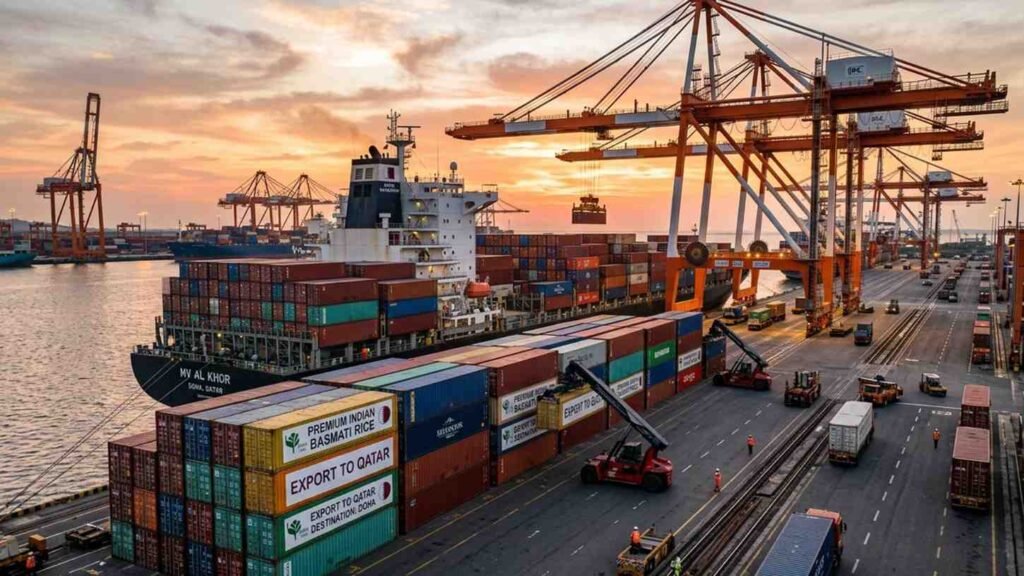
The shipping route from India to Qatar is well-established and relatively efficient by Gulf standards. Containerized shipments loaded at Mundra Port or Nhava Sheva (JNPT) in India typically take between 10 and 20 days to arrive at the Port of Hamad in Doha, depending on whether the routing is direct or involves a transhipment hub such as Jebel Ali in Dubai.
Rice is shipped in 20-foot dry containers or 40-foot high-cube containers, with the load configuration depending on bag size and stacking specifications. A standard 20-foot container accommodates approximately 21 to 25 metric tons of rice in 25 kg bags, while 40-foot containers can carry 24 to 27 metric tons depending on packaging.
MAD ERA works with a network of freight forwarders and shipping lines that serve the India-Gulf corridor with regular weekly sailings. Buyers receive pre-shipment notifications with vessel details, expected departure and arrival dates, and tracking information. Documentation is transmitted electronically ahead of vessel arrival to facilitate timely customs clearance.
For time-sensitive orders, air freight options are available for smaller consignments, though the cost differential versus sea freight is significant. Most commercial buyers opt for sea freight with adequate order lead times to optimize their landed cost.
Addressing Common Challenges in the Export Market
Every export market presents its own challenges, and the India-Qatar rice trade corridor is no exception. MAD ERA has developed operational responses to the most frequently encountered difficulties.
Moisture control during transit is a perennial concern for rice exporters, particularly during the monsoon months when ambient humidity in Indian ports is elevated. The response lies in robust moisture-proof packaging, pre-shipment moisture testing to ensure compliance with the internationally accepted maximum of 14% moisture content, and container desiccant placement where warranted.
Price volatility linked to seasonal procurement cycles, export policy changes by the Indian government, and global currency fluctuations can create uncertainty for buyers. MAD ERA addresses this through advance booking arrangements and seasonal procurement contracts that provide buyers with price stability for planned volumes.
Regulatory compliance updates in Qatar’s food import framework occasionally require updates to labeling, testing, or documentation requirements. MAD ERA maintains an active compliance monitoring function to stay current with Qatar’s Ministry of Public Health and MOFEGA import requirements and communicates proactively with buyers when updates are relevant to their product categories.
Lead time management is critical in a market where demand is relatively constant but stock-out situations are commercially damaging. MAD ERA recommends that buyers in Qatar maintain safety stock equivalent to at least 6 to 8 weeks of consumption and plan procurement cycles on a rolling basis to ensure uninterrupted supply.
Sustainability and Responsible Sourcing Practices
MAD ERA recognizes that the long-term viability of the India-Qatar rice trade depends on responsible stewardship of the natural resources that make Indian rice exceptional. The company collaborates with farming communities that practice water-efficient irrigation techniques, integrated pest management approaches that reduce chemical inputs, and soil health programs that maintain long-term agricultural productivity.
Packaging materials are selected with environmental impact in mind. Where technically feasible, recyclable and biodegradable packaging options are prioritized, and the company is actively exploring reduced-plastic packaging alternatives for its retail range. Carbon footprint reduction in logistics, including container loading efficiency optimization, is tracked as part of the broader sustainability program.
For buyers whose corporate sustainability programs require supply chain documentation, MAD ERA can provide ESG-relevant information covering farming practices, water use benchmarks, and chemical input management at the farm level.
How to Request Samples and Begin the Ordering Process
MAD ERA understands that quality claims require physical verification, and the company actively encourages prospective buyers in Qatar to request product samples before committing to commercial orders. The sample request process is straightforward: interested buyers submit their variety requirements, processing type preferences, and desired packaging format, and MAD ERA’s export team dispatches representative samples via courier within a mutually agreed timeline.
Upon sample approval, buyers proceed to submit a formal purchase inquiry specifying product variety, quantity, packaging, required certifications, and requested shipping timeline. A proforma invoice is issued upon price agreement, and order preparation is scheduled in line with vessel booking requirements. The standard lead time from order confirmation to shipment-ready status is 10 to 15 working days for established product lines, with longer timelines applicable for custom-packaged private label orders.
What to Look for When Choosing a Rice Exporter from India to Qatar
For buyers evaluating potential Indian rice exporters for the Qatar market, a structured assessment framework significantly reduces procurement risk. The following criteria should guide the selection process.
Verify that the exporter holds current APEDA registration, FSSAI licensing, and Halal certification. These are the minimum compliance requirements for legal rice export from India and food import into Qatar. Check that the exporter’s certifications are issued by recognized and audited bodies, not self-declared.
Assess the exporter’s sourcing transparency and quality verification capability. Exporters who source directly from farming communities and work with certified grading units have greater control over quality and batch traceability than intermediaries who aggregate product from unverified sources. Request third-party quality test reports and sourcing documentation to verify these claims.
Request third-party laboratory test reports for the specific product batches you intend to source, not just generic quality certificates. The test reports should cover pesticide residues, moisture content, head rice percentage, and relevant microbiological parameters.
Evaluate the exporter’s experience in the GCC market specifically. The Gulf region has distinct packaging preferences, labeling requirements including Arabic text compliance, Halal certification needs, and moisture tolerance standards that differ from other export markets. An exporter with a demonstrable track record in Qatar or neighboring GCC countries is more likely to anticipate and avoid compliance issues.
Finally, assess the exporter’s communication responsiveness and documentation management capability. Export transactions involve a significant volume of documentation, and errors or delays in paperwork can result in shipment holds, demurrage charges, and supply chain disruption. Choose a partner whose export documentation team is experienced, organized, and responsive.
The India-Qatar Rice Trade: Looking Ahead
The structural factors that have driven India’s rice exports to Qatar are expected to remain firmly in place over the coming decade. Qatar’s population continues to grow, driven by both natural increase and an expanding expatriate workforce, and per capita rice consumption shows no signs of declining. The country’s food security agenda, reinforced following the 2017 Gulf blockade experience, emphasizes the importance of diversified, reliable import relationships with countries like India that offer both product diversity and logistical proximity.
India’s agricultural modernization program, including investments in cold chain infrastructure, port facilities, and export grading technology, continues to improve the competitiveness and reliability of Indian rice exports. The two governments maintain a strong bilateral relationship that facilitates trade facilitation measures and regulatory cooperation.
MAD ERA is positioned to grow alongside this expanding market. Planned investments in expanded sourcing capacity, organic certification coverage, and enhanced private label capabilities will allow the company to serve a broader spectrum of Qatari buyers, from large format retailers and food distributors to specialty grocery chains and premium restaurant groups.
India exports both basmati and non-basmati rice to Qatar. Among basmati varieties, 1121, Pusa, 1509, and 1718 are the most widely traded. Non-basmati varieties including PR 11, PR 14, Parmal, Sona Masoori, and Sugandha also see consistent demand. The 1121 basmati in sella and golden sella forms is typically the single highest-volume variety in the Gulf trade, driven by its superior grain length and cooking quality that suits biryani and machboos preparation.
Transit time by sea from major Indian ports such as Mundra or Nhava Sheva to the Port of Hamad in Doha ranges from approximately 10 to 20 days. This timeline can vary depending on vessel scheduling, whether the route is direct or transshipment-based, and port congestion at either end. Buyers should account for an additional 3 to 5 days for customs clearance and port formalities on arrival.
At a minimum, an exporter should hold APEDA registration, FSSAI licensing, and a valid Halal certification from a recognized certifying body. For buyers requiring additional compliance assurance, ISO 22000:2018, HACCP, and GMP certifications are important indicators of a well-managed food safety system. Pesticide residue free certification and third-party laboratory test reports add further credibility for health-conscious market segments.
Yes, private label and custom packaging is a well-established service offered by experienced Indian rice exporters. MAD ERA can accommodate private label requirements across a wide range of bag sizes, packaging materials, and printing specifications. Arabic language labeling for Gulf market compliance is included as standard in private label programs. Buyers should allow additional lead time for private label orders to account for packaging procurement and pre-production approval processes.
Most exporters work with a minimum order quantity of one full 20-foot container, which accommodates approximately 21 to 25 metric tons depending on bag size and loading configuration. For buyers testing a new variety or assessing quality before committing to full container orders, many exporters including MAD ERA can facilitate smaller sample or trial orders at adjusted pricing, with the understanding that commercial orders follow upon sample approval.
The standard documentation set for a rice import into Qatar includes a Commercial Invoice, Packing List, Bill of Lading, Certificate of Origin, Phytosanitary Certificate issued by Indian plant quarantine authorities, Halal Certificate, and a Certificate of Analysis from an accredited laboratory. Some product categories or specific importers may require additional documentation, so buyers should confirm requirements with Qatar's Ministry of Public Health and their local customs broker before order confirmation.