
Rice Exporter From India to UAE
India has long been recognized as one of the world’s most important agricultural nations, and nowhere is that recognition more deserved than in rice production. With centuries of cultivation expertise, a natural climate that produces some of the finest aromatic varieties, and a farming ecosystem spanning some of the world’s most productive growing regions, India supplies rice to over 150 countries worldwide. Among these destinations, the United Arab Emirates holds a particularly significant position. The UAE’s multicultural population, thriving food service industry, and deeply rice-centric cuisine have made it one of the most consistent and high-volume importers of Indian rice in the world.
MAD ERA operates at the intersection of this agricultural strength and global trade demand. As an experienced rice exporter from India to UAE, we bring together direct farm sourcing, rigorous quality verification, and a comprehensive range of both basmati and non-basmati varieties to serve importers, distributors, retailers, and food service businesses across the UAE.
India's Position in the Global Rice Export Market
To understand why the UAE consistently turns to India for its rice requirements, it helps to understand India’s unique position in the global rice trade. India accounts for more than 40 percent of global rice exports, a figure that no other country comes close to matching. This dominance is not purely about volume. It is rooted in variety, quality consistency, and a vast agricultural infrastructure that has been built over generations.
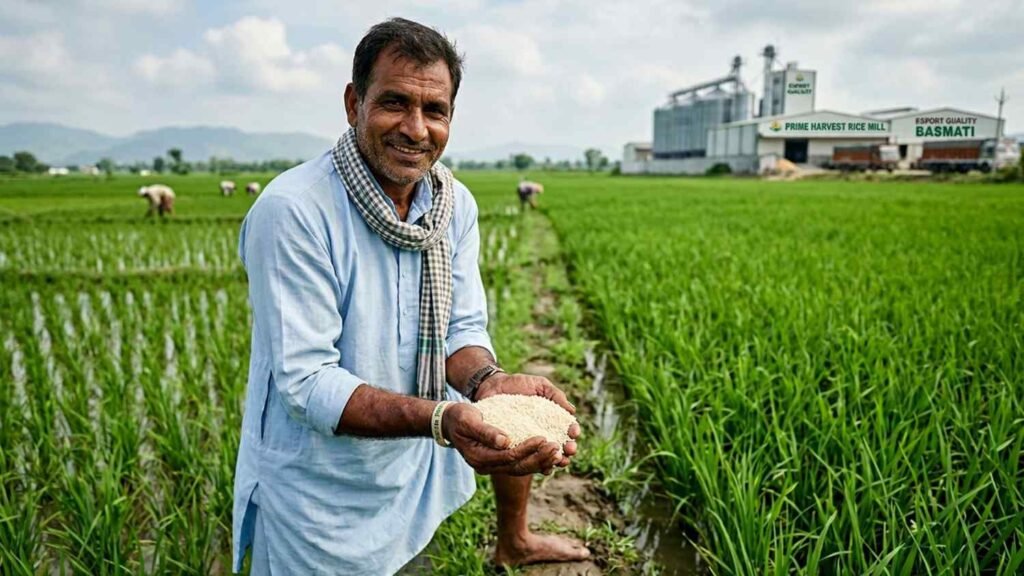
The northern Indian states of Punjab, Haryana, Himachal Pradesh, and Uttar Pradesh are the primary growing regions for basmati rice. These regions benefit from alluvial soil, consistent water supply from Himalayan rivers, and a climate that produces ideal growing conditions for long-grain aromatic varieties. Farmers in these belts have cultivated basmati for generations, refining practices that preserve the natural characteristics of each variety, including the elongation ratio, moisture content, and aromatic compounds that make Indian basmati genuinely distinctive in the global market.
Beyond basmati, India produces a wide range of non-basmati varieties including IR64, Sona Masoori, Sharbati, Parmal, and PR14 that serve different market segments in the UAE and beyond. The combination of premium and everyday rice varieties, available in large quantities and verified to international standards, makes India the most complete and reliable source for UAE rice buyers.
Why the UAE Market Depends on Indian Rice
The UAE is a country of contrasts a modern, rapidly growing economy with deep cultural roots, a large expatriate population, and a food culture that draws from South Asian, Middle Eastern, Persian, and North African traditions. Rice sits at the heart of all these culinary traditions.
The Indian and South Asian expatriate community forms one of the largest population segments in the UAE. For these residents, basmati rice is not simply a food item but a cultural necessity. Dishes like biryani, pulao, khichdi, and jeera rice are everyday preparations that depend on a specific grain quality to taste right.
Arabic and Middle Eastern cooking traditions are equally reliant on premium long-grain rice. Kabsa, mandi, machboos, and ouzi are celebration dishes that use rice as their centerpiece, and chefs across the UAE have long preferred Indian basmati for these preparations because of its ability to absorb flavors while maintaining a firm, separate grain texture after cooking.
The UAE’s hospitality and food service sector adds another layer to this demand. With thousands of hotels, restaurants, catering companies, and institutional kitchens operating across Dubai, Abu Dhabi, Sharjah, and the northern emirates, the volume of rice consumed professionally is enormous. These buyers require consistent quality, certified safety compliance, and reliable supply schedules all of which Indian exporters are positioned to provide.
Basmati Rice Varieties We Export to the UAE
MAD ERA exports a comprehensive portfolio of basmati rice varieties, each with distinct characteristics suited to different cooking applications and market segments in the UAE.
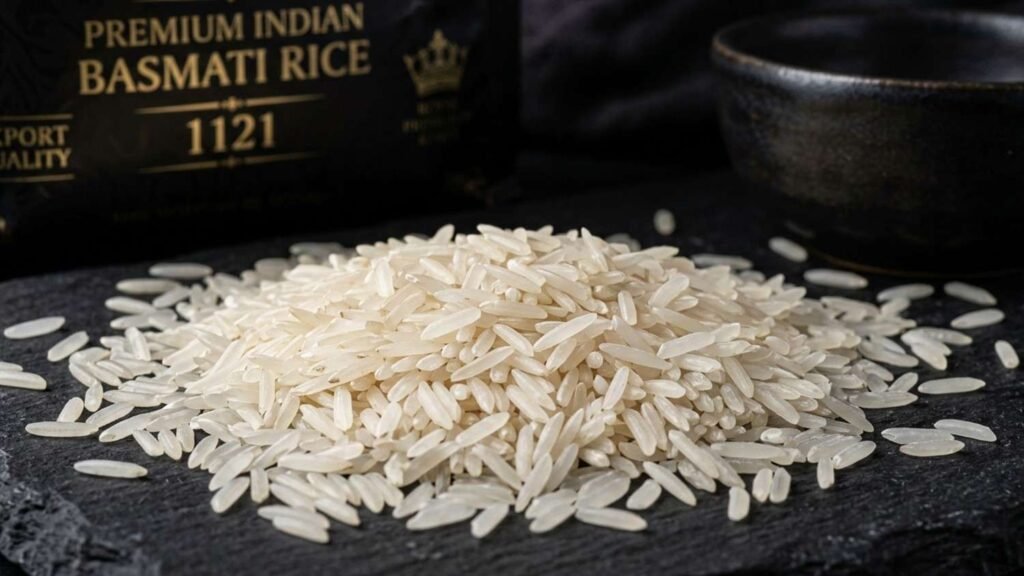
1121 Basmati Rice is the flagship variety in the global basmati market and the most widely consumed in the UAE. Known for its extraordinary grain elongation after cooking, sometimes reaching up to three times its raw length, 1121 Basmati delivers the dramatic visual and textural quality that UAE consumers associate with premium biryani and pilaf. We export 1121 in Steam, Sella, and Golden Sella forms.
1509 Basmati Rice offers a balance of grain quality and accessible pricing, making it a popular choice for both retail and bulk food service buyers in the UAE. Its elongated grain, clean aroma, and consistent cooking behavior make it a reliable everyday basmati option.
1718 Basmati Rice is increasingly popular in UAE markets for its consistent quality, slightly higher moisture retention, and adaptability across different cooking styles. It is available in Steam, Sella, and Golden Sella variants.
1401 Basmati Rice serves the mid-range segment with reliable grain length and clean aroma. Available in both Steam and Sella forms, it is a preferred choice for bulk buyers managing cost without compromising on quality.
Pusa Basmati Rice (PB1) represents the traditional basmati experience with a distinctive heritage aroma and shorter grain compared to 1121. It is preferred by consumers who value the authentic, old-school basmati fragrance over the dramatic elongation of modern hybrid varieties.
Traditional Basmati Rice appeals to the premium artisanal segment in the UAE, particularly buyers looking for heritage varieties grown using time-tested cultivation practices. Its intense natural fragrance and firm grain after cooking make it a standout in specialty retail.
Pesticide-Free Basmati Rice has grown significantly in demand as UAE consumers become more health-conscious and as UAE authorities tighten traceability and safety requirements for imported food. Our pesticide-free range is grown under controlled farming conditions, tested by independent laboratories, and available in compliance with EU, UK, and US safety standards.
Non Basmati Rice Varieties for the UAE Market
Not all rice consumption in the UAE is premium. Everyday cooking, institutional catering, and value retail require non basmati varieties that deliver consistent quality at accessible price points. MAD ERA exports a full range of non basmati rice to serve these segments.
IR64 is one of the most widely consumed non-basmati varieties in the UAE and across the wider Gulf region. Its medium grain, mild flavor, and soft cooked texture make it suitable for everyday meals across all communities.
Sona Masoori is particularly popular among South Indian communities in the UAE, where it is used for idli, dosa batter, and everyday rice meals. Its lower glycemic index compared to other white rice varieties has also made it attractive to health-aware consumers.
Sharbati Rice offers a slightly aromatic profile that sits between basmati and standard non-basmati, making it a popular upgrade option for budget conscious consumers.
Parmal Rice and PR14 serve the bulk catering and institutional segments with high volume availability, consistent grain quality, and competitive pricing.

Our Quality Standards & Sourcing Commitment
The quality of exported rice is determined not just by the variety grown but by how carefully it is sourced, verified, and packed. MAD ERA works exclusively with FSSAI-certified processing units that meet international food safety benchmarks ensuring every consignment we export is grade-accurate, free from foreign matter, and compliant with UAE import standards.
Basmati rice benefits significantly from aging. Freshly harvested basmati contains higher moisture and tends to be stickier when cooked. Aged basmati, stored under controlled conditions for a minimum period, develops reduced moisture content, improved elongation after cooking, and a stronger, more complex aroma. We source aged basmati from verified supply chains to ensure rice reaching UAE buyers performs exactly as expected in the kitchen.
Quality verification at MAD ERA is multi-stage. From the point of procurement, where incoming rice batches are assessed for moisture, foreign matter, grain quality, and pesticide residue, through grading, packing, and pre-shipment inspection each stage has defined quality checkpoints. Finished batches undergo laboratory analysis before export, and results are documented as part of the shipment records provided to every buyer.
Our export operations are backed by FSSAI compliance, HACCP (Hazard Analysis Critical Control Points), and ISO 22000 the internationally recognized food safety management standard. These certifications are mandatory for exports to the UAE and are rigorously maintained through regular internal and third-party audits.
Packaging Options and Private Label Services
Packaging for the UAE market requires attention to both functional and aesthetic requirements. UAE consumers and retailers expect packaging that is moisture-resistant, clearly labeled in English and Arabic, visually appealing on the shelf, and correctly sized for the intended buyer segment.
MAD ERA offers flexible packaging across a full range of sizes. Consumer packs are available in 1 kg, 2 kg, and 5 kg formats designed for retail shelf placement. Mid-range packs of 10 kg and 20 kg serve family buyers and smaller food businesses. Bulk packs in 25 kg and 50 kg woven or laminated bags are available for wholesale distributors, food service operators, and institutional buyers.
All our packaging materials are food-grade and moisture-resistant, with heat-sealed seams that maintain product freshness during transit and storage. For basmati rice, nitrogen-flushed packaging is available on request to further preserve aroma and extend shelf life.
For UAE retailers, importers, and distributors who want to build their own rice brand in the market, MAD ERA offers comprehensive private label services including custom bag design with your brand identity, Arabic and English bilingual labeling that meets UAE food labeling regulations, and packaging format selection based on your target market.

The Export Process: From Indian Farms to UAE Kitchens
Farm Sourcing and Procurement
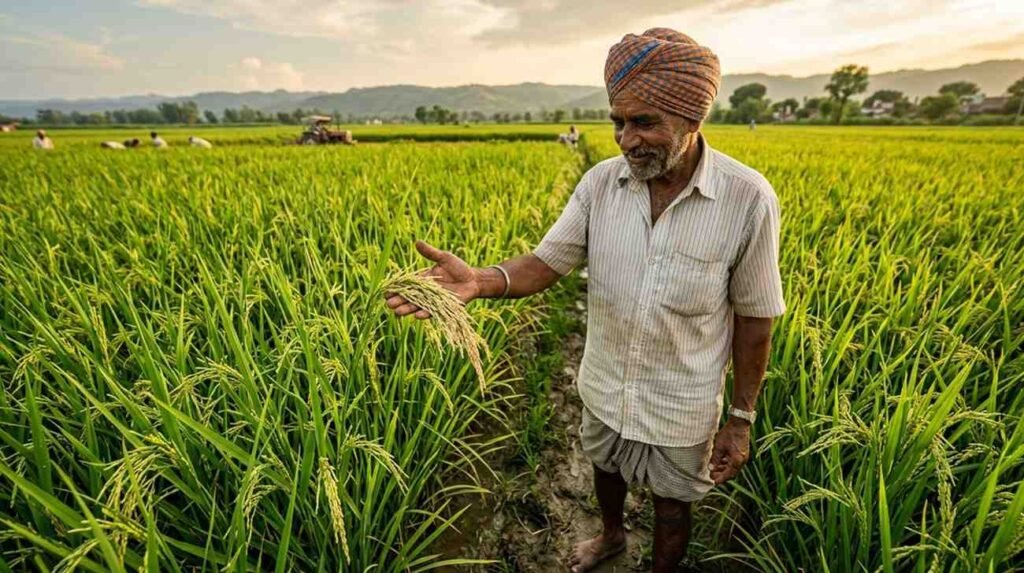
Our procurement team works directly with farmers and farmer groups across Punjab, Haryana, and Uttar Pradesh. Direct sourcing eliminates multiple layers of intermediaries, improving both pricing and traceability. Each batch of rice is evaluated for variety purity, moisture content, and physical quality before it is accepted for export.
Quality Verification and Packing
Before packing, each export batch undergoes final quality testing. Parameters checked include moisture content, grain dimensions, whiteness index, broken grain percentage, and pesticide residue levels. Only batches that meet all specifications are cleared for packing. Rice is then packed according to buyer specifications and prepared for dispatch.
Export Documentation
MAD ERA prepares a complete documentation package for every shipment, including the Commercial Invoice, Packing List, Bill of Lading, Certificate of Origin, Phytosanitary Certificate issued by the Plant Quarantine Authority, and APEDA registration documentation. For UAE-specific requirements, we also provide Halal Certification where applicable and food safety certificates as required by UAE food import authorities.
Shipping and Logistics
We ship primarily through Mundra and Nhava Sheva ports, which offer regular container shipping services to Jebel Ali Port in Dubai, the primary entry point for food imports into the UAE. Transit time from Indian ports to Jebel Ali typically ranges from one to two weeks depending on the shipping line and schedule.
Customs Clearance in UAE
On arrival at Jebel Ali, shipments undergo UAE customs inspection and food safety verification. Our complete and accurate documentation ensures smooth and timely customs clearance without unnecessary delays or holds.
What to Look For When Selecting a Rice Exporter from India to UAE
Valid Export Certifications
Confirm that the exporter holds FSSAI registration, APEDA registration, and internationally recognized certifications like HACCP and ISO 22000. Without these, shipments face the risk of rejection at UAE customs.
Product Range and Variety Depth
A capable exporter should cover both basmati and non-basmati varieties across multiple grades and processing types. This flexibility allows you to source all your rice requirements from a single supplier, simplifying procurement and logistics.
Direct Farm Sourcing and Traceability
Exporters who source directly from farmers rather than through traders or commission agents can offer better price stability, superior grain quality control, and full traceability from field to shipment. This is increasingly important as UAE authorities strengthen food traceability requirements.
Sample Availability
Any credible exporter should be willing to provide product samples before a bulk order is placed. Samples allow buyers to assess grain appearance, aroma, cooking quality, and eating texture firsthand.
Packaging Flexibility
Look for exporters who can accommodate your specific packaging needs, whether consumer-facing retail packs, bulk institutional bags, or custom-branded private label options.
Export Track Record
Exporters with a documented history of successful shipments to the UAE and other Gulf markets bring knowledge of local regulations, UAE buyer expectations, and logistics challenges that newer exporters lack.
After-Sales Support
Reliable exporters stay engaged after shipment. Quality disputes, documentation corrections, customs queries, and reorder planning all require responsive support from the exporter’s team.
Challenges in Exporting Rice from India to UAE
UAE food import regulations are detailed and strictly enforced. Every shipment must meet pesticide residue maximum limits (MRLs) as defined by UAE authorities, and labeling must comply with UAE food labeling standards. Exporters who lack the testing infrastructure or regulatory knowledge to consistently meet these standards create risk for their UAE buyers.
Price competition from Pakistan, Thailand, and Vietnam puts pressure on Indian exporters to maintain cost efficiency. However, competing purely on price can push suppliers to cut corners on grain quality, aging, or verification standards. Experienced exporters find the balance between competitive pricing and uncompromised product quality.
Logistics and freight volatility is an ongoing challenge. Container availability, freight rate fluctuations, and port congestion can all affect shipping timelines and landed costs. MAD ERA addresses this through advance freight booking, strong relationships with multiple freight partners, and proactive communication with buyers about any disruptions.
Seasonal variations in rice quality require careful procurement management. Monsoon delays, irregular rainfall, or heat stress during the growing season can affect grain quality in specific harvest batches. Our procurement team monitors crop conditions closely and adjusts sourcing across multiple growing regions to maintain consistent quality throughout the year.
Our Commitment to Sustainable and Responsible Export Practices
The global food trade is increasingly being evaluated not just on price and quality but on environmental and social responsibility. MAD ERA is committed to working with farmers who practice responsible water management, minimized chemical use, and soil health preservation. Our pesticide-free rice range is a direct response to both consumer health priorities and the growing regulatory focus on chemical residues in exported food.
We actively promote the adoption of modern farming techniques that reduce water consumption per kilogram of rice produced. Our farmer engagement programs include technical training, soil testing support, and market linkage that helps farming communities build sustainable livelihoods while delivering grain that meets international quality expectations.
We export a comprehensive range covering 1121 Steam, Sella, and Golden Sella Basmati, 1509, 1718, and 1401 Basmati in multiple processing forms, Pusa Basmati (PB1), Traditional Basmati, and Pesticide-Free Basmati variants compliant with EU/UK and US standards. Our non-basmati exports include IR64, Sona Masoori, Sharbati, Parmal, and PR14.
Yes. Our exports carry FSSAI, HACCP, and ISO 22000 certifications. Every shipment is accompanied by a Phytosanitary Certificate, Certificate of Origin, quality test reports, and where required, Halal Certification. All documentation complies with UAE food import regulations and customs clearance requirements.
Absolutely. We provide samples of any rice variety from our export range on request. Samples allow you to assess grain appearance, aroma, cooking behavior, and eating quality before committing to a bulk order, and we strongly encourage this step for new partnerships.
Yes. We offer full private label services including custom bag design, bilingual English and Arabic labeling, and packaging format selection across consumer, mid-range, and bulk pack sizes.
Sea transit from Mundra or Nhava Sheva to Jebel Ali typically takes one to two weeks, making total delivery time from order confirmation to UAE port arrival approximately three to five weeks depending on order and shipping schedules.
We offer packaging in 1 kg, 2 kg, 5 kg, 10 kg, 20 kg, 25 kg, and 50 kg formats. Custom sizes outside this range can be accommodated based on minimum order quantities. All packs use food-grade, moisture-resistant materials with heat-sealed closures.